
This post is an updated version of the comparison between white hat and black hat link building published in 2020. Not much has changed since then, but this new post will go over some things that it missed (or couldn’t discuss because it wasn’t a thing yet).
Link building involves getting high-quality links from reputable websites, called backlinks. When done by the book (read: Google Search Essentials), it can deliver great returns over the long term. As for how long, well, that depends on a lot of things, but don’t expect it to kick in overnight or within the first few days.
Unfortunately, link building can also not be done by the book. Such methods may be easy, cost next to nothing, and deliver results faster, but there’s a reason they aren’t in the book. Websites may get away with them for a few days, but search engine algorithms will catch up to them eventually, with major consequences.
If you’re an SEO agency or business with in-house SEO looking to add link building to your strategy, knowing the pros and cons of these two approaches is key. The industry refers to the former as white hat link building and the latter as black hat link building.
What’s With The Hats?
Before that, some of you may wonder why link building (and SEO in general) is classified by hats. The industry has been calling that from the start, only picking up steam when Bruce Clay, known as “the father of SEO,” popularized the terms.
There’s no way to be certain as to why they used hats in this case. That said, it fit the theme of SEO as the lawless “Wild West” back then, since it lacked the rules that shaped the SEO we know today. Just as the bad guys of Western movies wore black hats (and the good guys white hats), bad and good techniques became classified as such.
Not only did the names stick, but they also remain relevant. Many consider that SEO is in a new “Wild West,” this time driven by AI and the struggles of implementing clear rules on its use. One doesn’t have to look far for examples, namely AI-generated content.
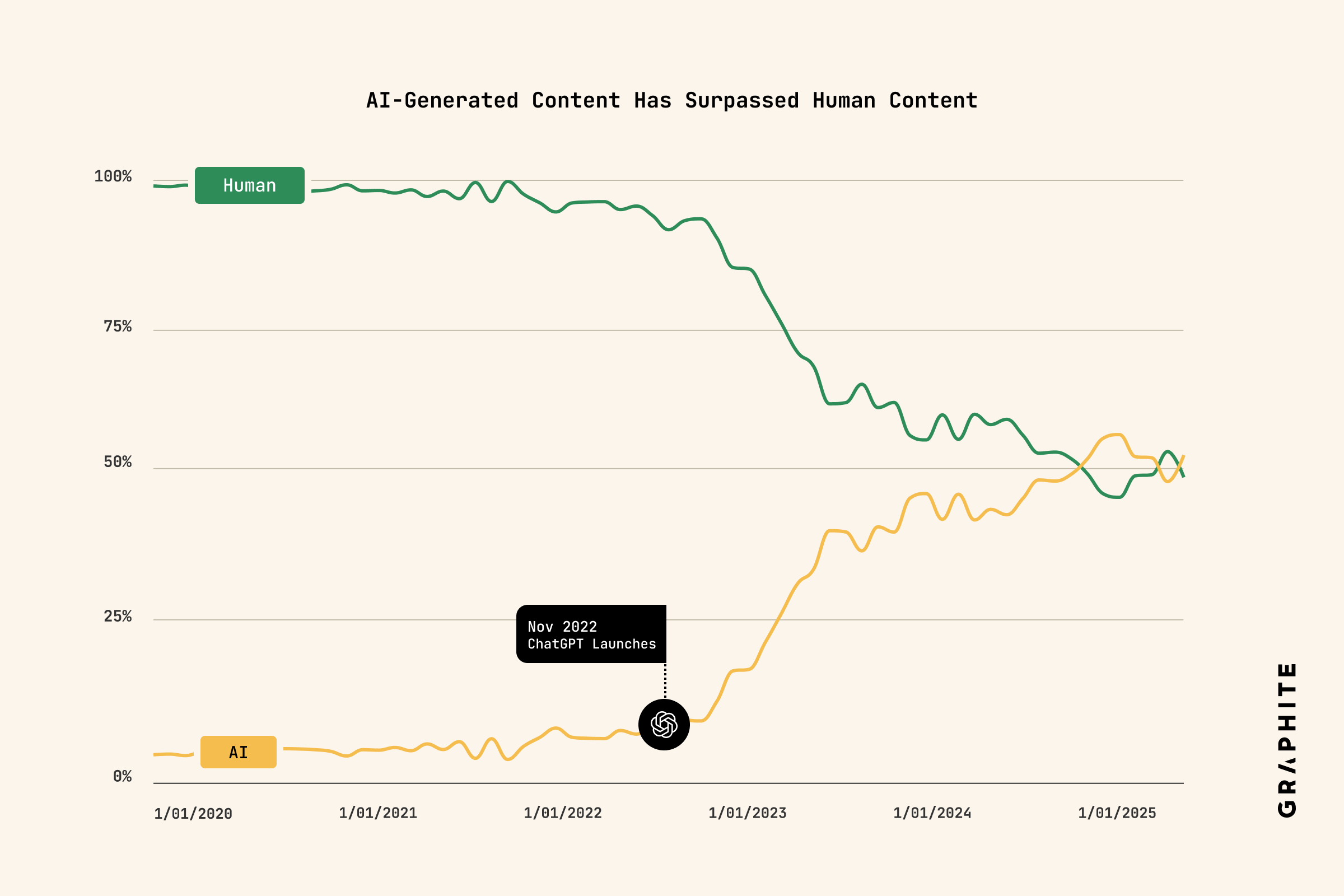
Source: Graphite
What is White-Hat Link Building?
White-hat link building is essentially good link building, one that’s aligned to existing SEO guidelines. The strategies and techniques are characterized by low risk and transparency. However, they take time to deliver results and don’t guarantee high rankings.
This is the kind of link building websites should do, not just because it’s right. The risk of a penalty by search engines is low—if not next to none—because it encourages following the rules. It also urges websites to be clearer about the content they publish, especially when it comes to publishing sponsored content on third-party sites.
Side note: Not to be confused with white-label link building, which refers to outsourcing link building functions to a dedicated provider. However, a good white-label link-building service is obligated to practice white-hat link building.
Below are among the most common white-hat link building techniques.
Creating Unique and Insightful Content
Search engines don’t like having to choose which of two identical pieces of content is the original. Not only does it dilute link equity, but it also wastes their crawl budget. Imagine choosing a startup to invest in, only for your choice to shut down several months later.
Google states that it wants to see “helpful, reliable, people-first content,” but it also wants content to be unique. That means a piece that hasn’t been published anywhere on the Web yet. One way to confirm this is to run your piece through a plagiarism checking tool such as Copyscape. If it returns with what we call “CS hits,” it’s likely the content already exists.
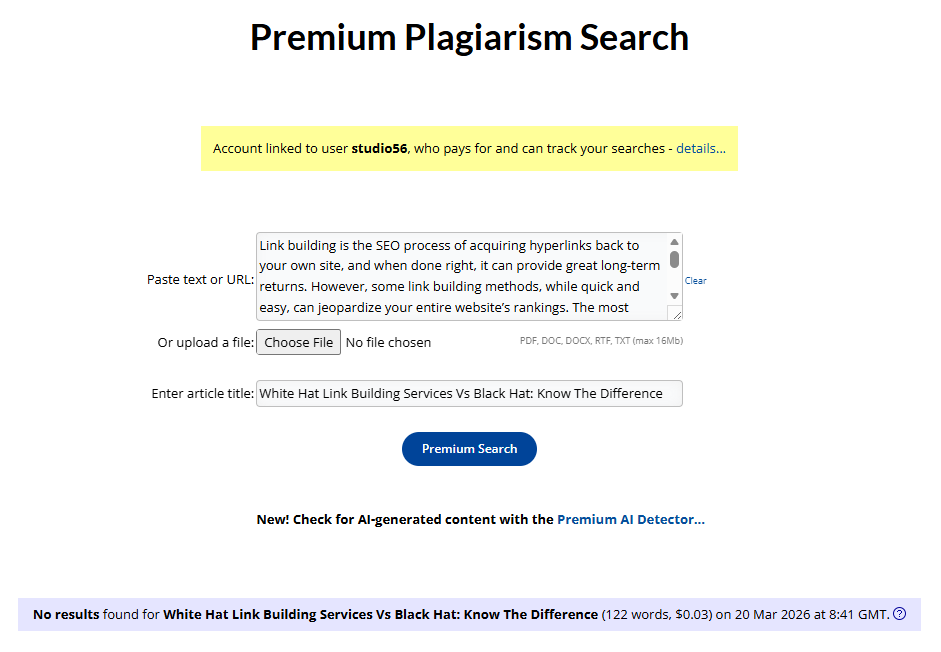
Running a plagiarism check on the first two paragraphs of the old article.
Emphasis on “likely,” though, because plagiarism checkers aren’t always 100% accurate. Sometimes, the tool may flag direct quotes even when the source is cited as clear as day. It’s important to know the nature of plagiarism—that is, passing off others’ work as your own. Give credit (and backlinks) where it’s due, and your content will be fine.
Earning Backlinks From Quality Websites
Backlinks represent a website’s “vote of confidence” in a piece of content. If this post gets cited and linked in an article by, say, Search Engine Journal (a man can dream), it receives a backlink. Not to mention one from a well-known source of SEO news and guides.
Backlinks have been a currency of sorts for SEO since the early days of Google’s PageRank. With keywords too prone to manipulation (i.e., keyword spam), backlinks replaced them as a more reliable measure of a website’s credibility.
However, while getting backlinks from websites is one thing, getting quality backlinks from another site is another. Google is strict about where the content’s getting its backlinks, as it dealt with so-called “link farms” a while back. While a more convenient way to get links, these websites’ content tends to be of low quality.
Before asking for a backlink from a website, it pays to make sure that you aren’t looking for one in a link scheme. Most of the signs of one are found in the numbers, so you may need to use an SEO analytics tool when doing due diligence.

Not knowing that the link is part of a link scheme is unfortunately not an excuse. This is why it’s important to do your homework first. The good news is that some platforms like NO-BS Marketplace already do most of the work, providing a database of vetted publishers along with transparent metric data. The only thing you have to do is choose wisely.
Mixing Up Backlinks
We know better than to steer clear of spammy links, but having too many high-authority links can be just as harmful. This is because leaning too much in either direction makes your content’s link profile seem unnatural.
Amid the focus on quality backlinks, Google still wants content to earn its links organically. However, it’s also aware that this route takes too long to deliver results, if there’s any. To this end, SEO professionals recommend mixed link building, which involves mixing up:
High and low-authority backlinks
Guest post and editorial backlinks
Dofollow and nofollow backlinks
Contextual and non-contextual backlinks
Keep in mind that this is no excuse to use too many links. Quality and relevance remain key considerations in this strategy.
What is Black-Hat Link Building?
Link building practices that go against current SEO guidelines are classified as “black hat.” These techniques trick the algorithm into ranking content high up in search results without providing meaningful value to users. In other words, if an article or blog post doesn’t seem helpful to readers, it probably ranked using black hat techniques.
We’ve already established that link farms and other schemes are black hat practices. Here are several other examples of black-hat link building.
Creating AI Slop
Contrary to popular belief, Google doesn’t ban AI content. It argues that automation has long been used to help streamline content creation, opening the door to new and exciting ways. It also points out that AI content doesn’t get special treatment, subject to the same checks as human-generated content.
That said, if you treat AI as a way to cut corners…
If the thought of helping users never crosses your mind…
If all you care about is getting your brand to the top spot…
…that’s a problem.
Search engines have a vested interest in stopping sloppy AI content from proliferating in search results. Besides the safety risks it poses, it also risks degrading future AI models because their training data relies on existing content. Technology experts warn that this can lead to whole models collapsing.
AI content may not be prohibited, but one made to game the algorithm is. Search engines, especially Google, which trains Gemini, will crack down on the latter eventually. While the algorithm will ignore such content most of the time, the more egregious cases will result in a harsh automatic or manual penalty.
Hiding Text and Links
Hidden text and links (also known as hidden text and link abuse) are invisible to the naked eye but not to crawlers. As an overabundance of links can make the page look messy and spammy, websites use techniques to hide them from view, such as:
Camouflage: The text and links use the same color as the background to keep them hidden. A common example involves hiding them within the whitespace.
Concealment: The text and links are placed behind visible media like images and web graphics. Take note that this is different from linking an image.
Offsetting: Using CSS, a page can position the text and links beyond the viewable screen. Visitors rarely bother changing the screen resolution when viewing a page.
Font size 0: Using CSS, the text and links can be coded to have a font size of zero. Not only does this make them invisible but also inaccessible to screen readers.
Opacity 0: Setting the text and links’ opacity to zero makes them fully transparent. But unlike setting the font size to 0, this format is still readable by screen readers.
Blending in: This technique involves linking a small character within the content body such as a hyphen. Although visible, unaware visitors might not catch this.
Not to be confused with cloaking, which refers to providing separate versions of content for visitors and search engines. Regardless, cloaking is another black hat technique.
Doing Negative SEO
When a business’s idea of success means ensuring that its competitors flop, sadly, there’s negative SEO for that. This is essentially using black hat link building on a competitor’s site to sabotage its SEO efforts. Negative SEO is, in a way, a kind of cyberattack.
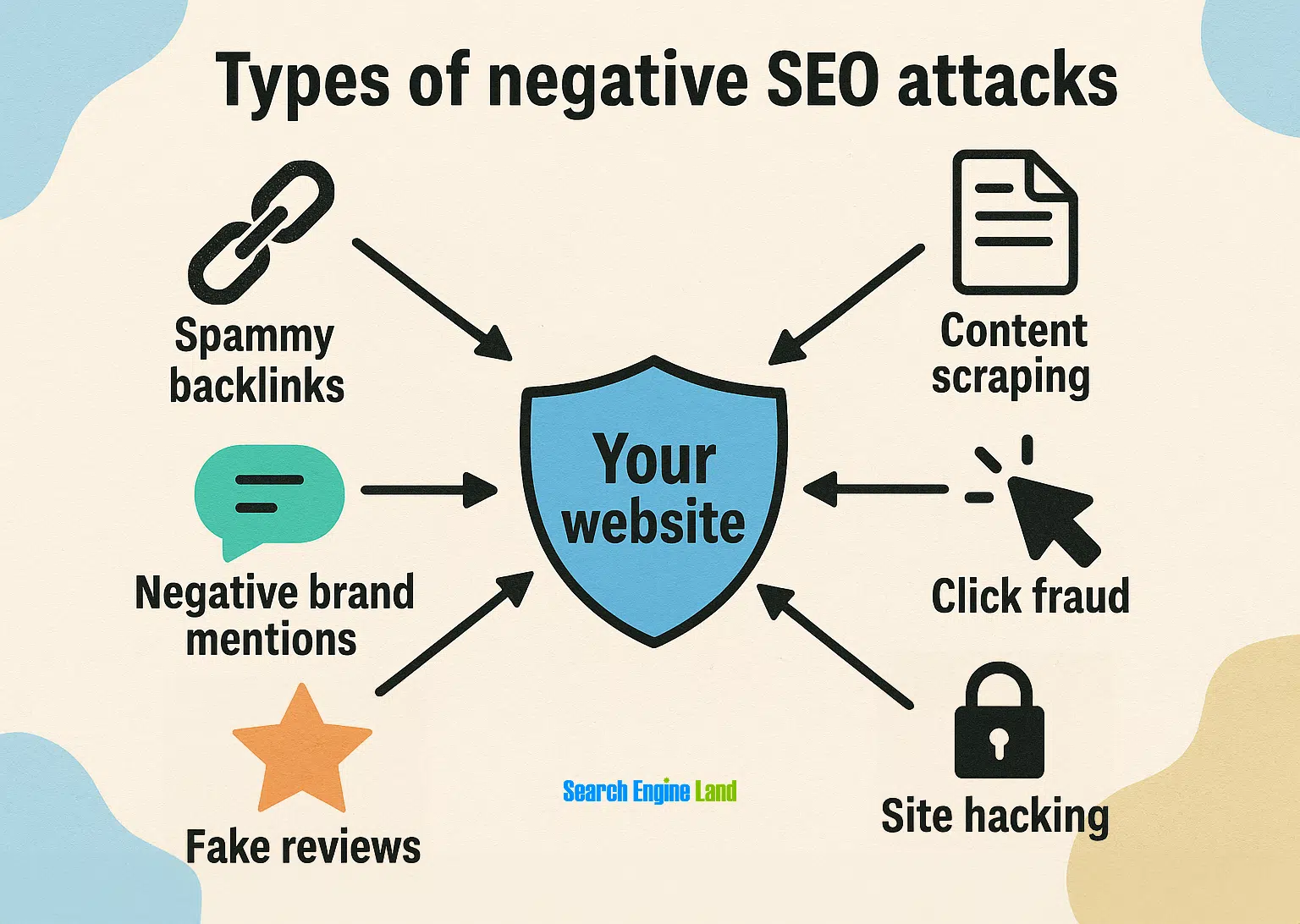
Source: Search Engine Land
Now, Google will likely tell you that the threat of negative SEO may be overblown because it doesn’t work. In an interview in 2024, Gary Illyes of Google’s Search Team recounted the cases that complained about an alleged negative SEO attack. All of those, he said, turned out to be anything but negative SEO.
However, malicious intent isn’t the only way a website suffers from SEO. Experts also say you can set up your website to inadvertently shoot itself in the foot. One likely scenario is when migrating to a new domain, where a registration lapse can provide a brief window of opportunity for spammy links to flood it.
Wear the Right Hat
No one ever said proper link building would be easy. We’ve been down the spammy road before, and the content it put out was rarely helpful. Now that our aim for modern content is clear, it’s past time that we wear the right hat for doing SEO.